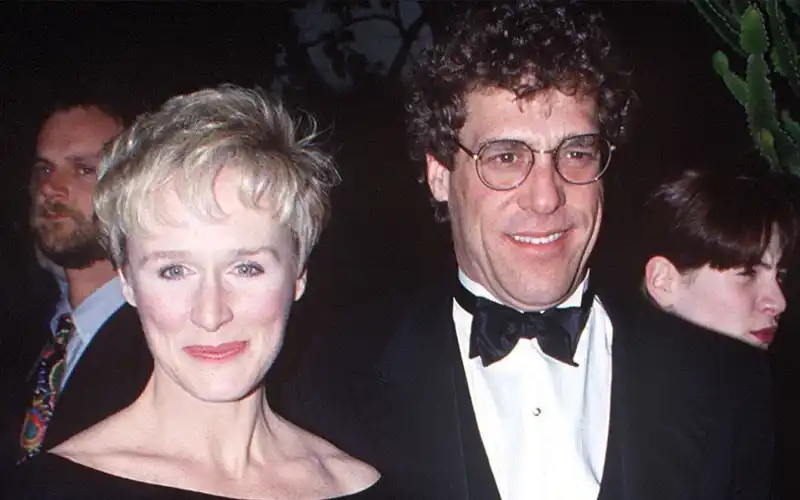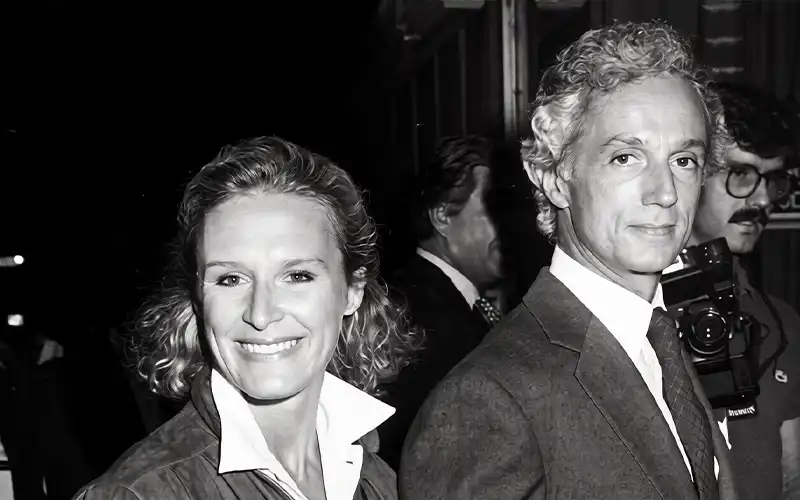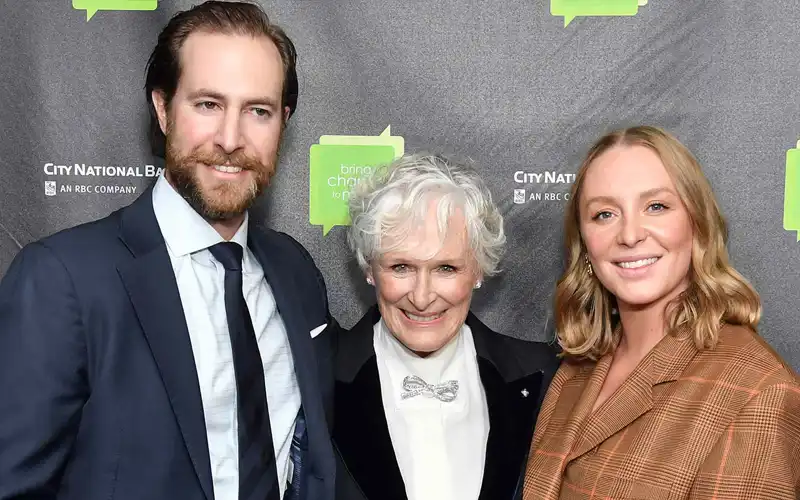
Picture a Saturday night in front of the television. Alex Kingston, the actress many people remember from ER and Doctor Who, is dancing on Strictly Come Dancing with her partner Johannes Radebe. Millions of people are watching. Somewhere between the music and the scores, a viewer picks up a phone and types a simple question. Who is her husband?
The answer leads to Jonathan Stamp, a man who has spent his working life behind the camera, bringing the ancient world to the screen. He rarely gives interviews and almost never appears on red carpets, yet his name keeps rising in search results. This article explains why. It covers his shows, his career, his wedding in Rome, and the private life he protects so well.
Why People Search for Him
Most of the curiosity starts with his wife. Alex Kingston has been a familiar face for decades. She played Dr. Elizabeth Corday in ER and later became River Song in Doctor Who, a role fans still love. When she joined Strictly Come Dancing, a new audience met her, and many wanted to know about the person waiting for her at home.
The problem is that the couple keep their relationship out of the spotlight. There are very few interviews, photos, or magazine features to read. When facts are hard to find, the internet fills the gap. Many pages now publish long “biographies” full of guesses, copied lines, and numbers nobody can prove. Some even give him awards he has never been linked to.
What we can say with confidence is simple. Jonathan Stamp is a British television producer, scholar, and documentary maker who began his career in journalism. Kingston has called him the right man for her, a warm comment from an actress who has spoken openly about her earlier marriages not lasting. This is her third marriage, and it seems to be the one that stuck.
His Early Films
If you want to understand his work, start with the pyramids. Building the Great Pyramid was released in 2002 as a BBC and Discovery Channel co-production. He wrote it, produced it, and directed it. Instead of a dry lecture, the film follows a fictional builder named Nakht, played by Abdullah Mahmoud. The late Omar Sharif lent his voice, and Michael Pennington narrated. The film shows how the Great Pyramid at Giza could have been built, using the best research of its day.
The film also made strong use of computer graphics, which was a big step in the early 2000s. Its visual reconstruction of the monument earned praise and an Emmy nomination for visual effects. A companion book, written with the author Kevin Jackson, came out from BBC Books in October 2002. An American edition followed in early 2003, and for many readers it was their first look at the project.
A year later came a 2003 television film about the Colosseum and the people who fought and died inside it. Here he is credited as an executive producer. Like the pyramid film, it mixed acted scenes with expert knowledge so that viewers could feel what life was like inside those walls. Both projects show his main talent. He takes a huge, distant subject and turns it into a story that a beginner can enjoy.
The Rome Series
His best known credit is Rome, a big drama made by HBO together with the BBC. It ran for two seasons in the middle of the 2000s. The story follows two ordinary soldiers, Lucius Vorenus and Titus Pullo, played by Kevin McKidd and Ray Stevenson, as the Roman Republic falls apart around them. He joined the team in 2004 as a historical consultant and also worked as a co-producer.
So what does a historical consultant actually do? In simple terms, this person helps writers and designers get the small things right. How did people dress, eat, pray, and argue in the street? What did a house look like, and how would a general speak to his men? Most viewers never think about these details, but they are the reason a scene feels real instead of staged.
His skill in this area travelled well. He later advised on projects for companies such as HBO, Sony, Amazon, MGM, and Showtime. Earlier in his career he also produced the BBC history series Timewatch and Reputations. A writing project called Lords of Florence has also been linked to him, although it is still in early development.
From Journalist to Producer
His path was not a straight line. Before the pyramids and the Roman generals, he worked in journalism, where he learned how to find a story and tell it clearly. That skill never left him. It is probably why his documentaries feel like storytelling and not like classroom lessons.
He went to St Paul’s School in London from 1976 to 1981. From 1982 to 1986 he studied at Balliol College, one of the oldest colleges at the University of Oxford, and later earned a master’s degree. His results were strong. He won the Brackenbury Scholarship in Literature and graduated with a First Class Honours degree, which is the highest mark a student can receive.
He then moved up inside the BBC. In 2000 he became Director of Development in the BBC’s History Department, a job that means choosing and shaping new programme ideas. In 2002 he was named the BBC’s Head of Archaeology, the same year his pyramid film reached viewers. When HBO began planning Rome in 2004, he was a natural fit because he understood both television and history. That mix explains why people call him a historian, a consultant, or a producer. The best description is a producer and scholar who works with history, not a professor who teaches it.
The Wedding in Rome
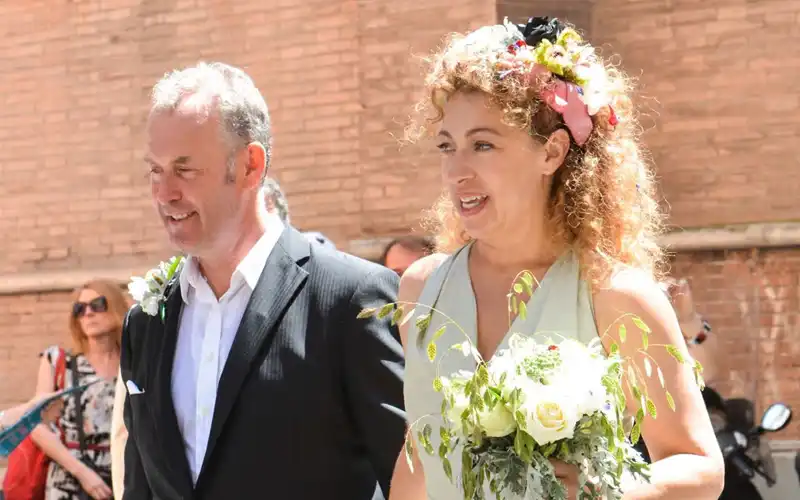
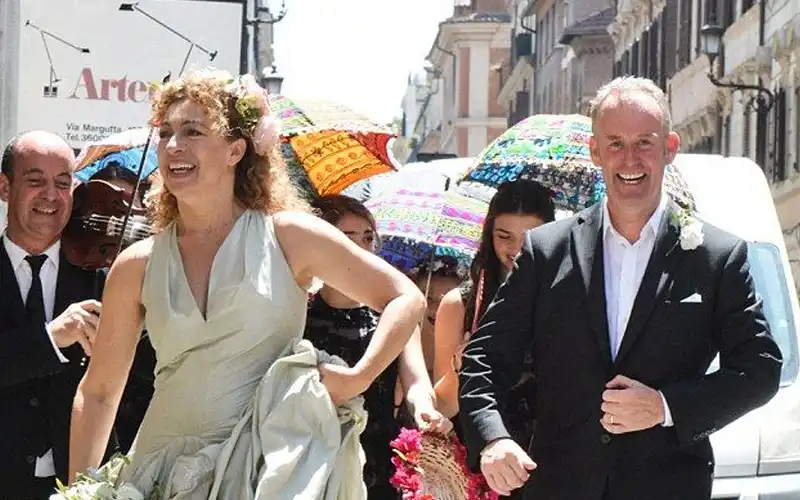
On Saturday, 18 July 2015, Alex Kingston married her long-time partner at All Saints Anglican Church in Rome. She was 52, and it was her third marriage. Rome was a perfect choice for a man whose career had been built on the Eternal City.
The day became famous for one detail, the dress. Instead of a white gown, Kingston wore an olive green ruffled dress, a bold choice that people still talk about. Reports from the day say she became very emotional during the ceremony. Her daughter Salome was one of the bridesmaids, so it felt like a family day as much as a romantic one.
Fans heard the news quickly, and messages of congratulation appeared on social media within a day. Even so, the couple kept things simple. There was no large public party and no magazine deal. It was a small and elegant ceremony in a city that means a great deal to both of them. It tells us that the pair love beauty and history and have no wish to turn their private life into a show.
Family and Private Life
Many people ask whether the couple have children. They do not have any together. Kingston has one daughter, Salome Violetta Haertel, born on 28 March 2001. Salome is the child of Kingston’s second marriage, to the German writer Florian Haertel, and their divorce was finalised in 2013. This makes Jonathan Stamp a stepfather to Salome, and the family moments that reach the public suggest a close bond.
What about his own parents and siblings? Nothing reliable is public. No trusted source names his mother, his father, or any brother or sister. Some pages claim to know, but they give no proof, and a few simply mix him up with his wife’s family. It is better to leave these details blank than to fill them with guesses.
This silence is not a mystery. It is a choice. The couple have spent years keeping their marriage away from the cameras, and that is rare in modern celebrity life. Their relationship has lasted without becoming public property. If a page gives you a long list of personal facts about him, it is wise to ask where those facts came from.
Why He Stays Out of Sight
There is a nice irony here. He spent decades helping the world see the pyramids, the arena, and the streets of ancient Rome, yet he has never needed to appear in the picture himself. A producer or consultant works behind the scenes. Their best work is the kind nobody notices, because everything on screen simply feels right.
Perhaps this is the real reason for all the attention. People are curious about the quiet person standing next to a famous face. They want to know what such a person does and what kind of life they share. The answer is simple. He tells stories about the past, he cares about his family, and he does not chase fame.
Conclusion
Jonathan Stamp is proof that a person does not need the spotlight to leave a mark. His films opened the pyramids and the Colosseum to ordinary viewers, and his work on Rome helped make an ancient world feel alive. His journey from journalism to the BBC and then to major drama shows how curiosity and good storytelling can take a person far.
The wedding in Rome and the calm family life that followed show the same quiet style. He lets his work speak, and he lets his marriage stay private. So the next time you watch a Roman scene that feels real, or a documentary that puts you beside the pyramid builders, remember the person who helped make it believable. He may never ask for credit, but the work is there for everyone to enjoy.
FAQs
1. How old is Jonathan Stamp?
His exact birth date has not been confirmed by any trusted source. His school and university dates suggest he was born in the early 1960s, so he is likely around sixty today. Be careful with any page that gives a full birthday without showing where it came from.
2. What is Jonathan Stamp’s net worth?
There is no reliable figure. His long career in television, documentaries, and consulting has surely been successful, but earnings from this kind of work are not made public. Any exact number you see should be treated as a guess.
3. Does he have children?
He and Alex Kingston do not have children together. Kingston has a daughter, Salome, from her second marriage, and he is her stepfather. The family keeps details about Salome and their home life private.
4. Is he connected to Ralph Fiennes?
Not directly. Fiennes was Alex Kingston’s first husband, and they were married from 1993 to 1997. People often search the two names together because both appear in the list of her marriages, but the two men are not linked in any other way.
5. Where can I watch his work?
A good place to start is Building the Great Pyramid, which is short and easy to follow. After that, try his Colosseum film, and then the drama series Rome if you want something longer. What you can watch depends on your country, so check your local streaming and DVD options.
6. Is he on social media?
There is no verified official account that can be confirmed. Several fan pages and copycat profiles use his name, so be careful before you trust one.
7. What is he working on now?
Nothing has been officially announced. A project called Lords of Florence has been linked to him as a writer, but there is no confirmed release date. It is best to wait for news from a reliable source.