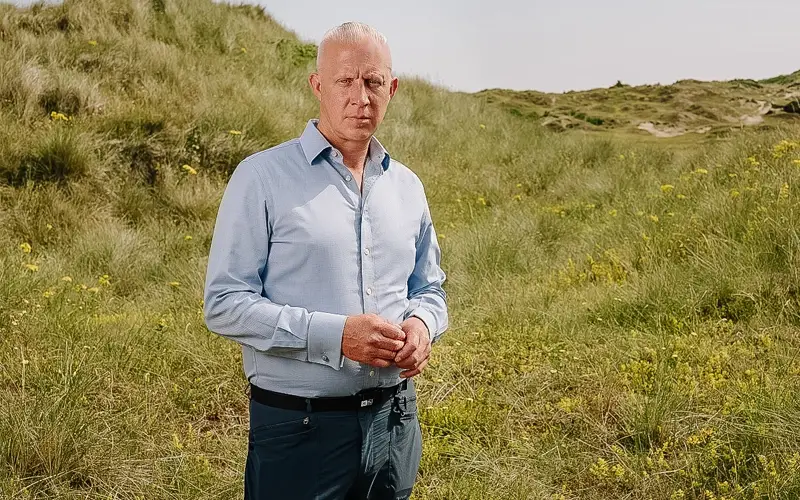
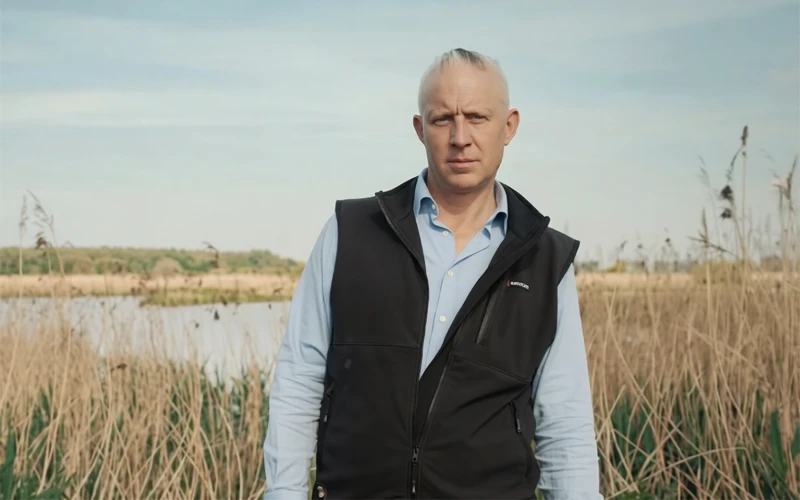
While many members of the Fiennes family became known for their achievements in film, television, and music, Jacob Fiennes built his reputation in a very different world. He chose farmland, wetlands, and wildlife over the entertainment industry, developing a career focused on protecting Britain’s natural environment.
As a conservation leader and author, he has helped demonstrate that modern agriculture can produce food while creating better conditions for wildlife. His work at the Holkham Estate has also brought attention to practical solutions for the country’s growing biodiversity challenges.
Quick Profile
| Detail | Information |
| Full name | Jacob “Jake” Fiennes |
| Date of birth | May 27, 1970 |
| Age | 56 years as of October 2026 |
| Birthplace | Salisbury, England |
| Nationality | British |
| Profession | Conservationist, land management specialist, author |
| Known for | Conservation leadership at Holkham Estate |
| Book | Land Healer: How Farming Can Save Britain’s Countryside |
| Spouse | Melanie Plaice, married in 1999 |
| Children | Teale Isabella Fiennes and Nathaniel Fiennes |
| Parents | Mark Fiennes and Jennifer Lash |
| Twin brother | Joseph Fiennes |
Jacob Fiennes and His Work Beyond Fame
Jacob Fiennes is an English conservationist who has made environmental protection the centre of his professional life. Rather than following the artistic direction associated with his family, he developed practical knowledge of farming, wildlife habitats, and countryside management. His career reflects a belief that protecting nature requires more than simply setting land aside. It also requires careful planning, scientific understanding, and cooperation with the people who depend on the land for their livelihoods.
His work gained wider recognition through his leadership at the Holkham Estate in North Norfolk. This historic estate combines commercial farming, natural habitats, tourism, and wildlife conservation across a substantial area of countryside. Managing these different responsibilities requires balancing economic needs with environmental priorities. Fiennes has helped promote a model in which agriculture and biodiversity support each other instead of competing for space.
Early Career and Outdoor Experience
Fiennes developed a strong interest in the natural world when he was young. Although he left formal schooling at 16, his education continued through practical experience. He travelled to Australia, where he worked on cattle and sheep stations and gained an understanding of livestock, land use, and rural working life.
This experience helped him see how farming decisions affect the environment. Productive land needs careful management, but farming methods can also influence soil health, water systems, and the availability of food and shelter for wildlife. Understanding these relationships became an important foundation for his later conservation work.
After returning to Britain, he spent more than two decades working to improve land management at the Raveningham Estate in Norfolk. This extended period allowed him to apply and assess conservation methods in a working agricultural business. Rather than treating environmental protection as a separate activity, he explored ways to make it part of normal estate management.
Leadership at Holkham Estate
In 2018, Fiennes took on the role of Director of Conservation at the Holkham Estate. Located in North Norfolk, the estate is known for its extensive countryside, coastal landscapes, wetlands, and agricultural operations. Its varied environment makes it an important setting for conservation projects.
Under his leadership, conservation work has focused on improving habitats while maintaining productive land. Wetland management, water-level control, habitat creation, and the protection of important wildlife areas all form part of this approach. These efforts support species that need specific habitats at different times of the year.
Reported conservation achievements at Holkham include the return of more than 200,000 overwintering and migratory birds. The wider landscape supports notable birdlife, including spoonbills, marsh harriers, bitterns, and geese. Such results show why habitat management matters, especially for species that need safe feeding and breeding grounds.
A Different Approach to Farming
Fiennes is often associated with the idea of environmental farming. This approach challenges the assumption that agricultural production and wildlife protection must always be in conflict. Instead, it encourages farmers to identify opportunities for nature within working landscapes.
One of his central ideas is that farms could dedicate around 10 percent of their least productive land to wildlife habitats. Depending on the site, these areas may include hedgerows, ponds, wildflower strips, and habitats for native wildlife. The exact design would depend on local conditions, but the wider principle is that relatively small, carefully selected areas can contribute to a connected natural environment.
He also supports active habitat management rather than assuming that leaving land untouched will always produce the best results. Wetlands, for example, may need carefully managed water levels to provide suitable conditions for particular birds and plants. Different species require different habitats, so conservation decisions must respond to the needs of the local ecosystem.
This approach also considers food security. Britain needs reliable agricultural production, and conservation plans must recognise that reality. By combining productive farming with targeted habitat restoration, Fiennes offers a model that can be considered by other estates and farming businesses.
Writing and Environmental Influence
In 2022, Fiennes published Land Healer: How Farming Can Save Britain’s Countryside. The book explores his experiences in land management and presents his ideas about the relationship between agriculture and nature. It combines personal reflections with an argument for practical environmental change.
The book shows that conservation is not limited to scientists and policymakers but also involves farmers, estate managers, and local communities. People who work on the land often have detailed knowledge of its seasonal changes, wildlife, and practical limitations. Their experience can help turn environmental goals into workable projects.
Fiennes has also contributed to wider discussions about farming and biodiversity. His practical experience has made him a voice in conversations involving agricultural organisations, conservation groups, and public authorities. His approach is particularly relevant as Britain considers how farming policies can encourage environmental improvements without undermining the ability to produce food.
His work illustrates how experience gained in the countryside can inform decisions at a national level.
Joseph and Jacob Fiennes Twins
The connection between Joseph and Jacob Fiennes twins is one of the most interesting details about his personal life. They were born on May 27, 1970, in Salisbury, England, and are fraternal twins. Although they share the same birthday and family background, their careers developed in very different directions.
Joseph pursued acting and became internationally recognised for roles in Shakespeare in Love and The Handmaid’s Tale. Jacob, meanwhile, concentrated on wildlife, farming, and environmental management. Their contrasting careers demonstrate how members of the same family can develop distinct interests and achieve success in different fields.
While Joseph built his reputation in film and television, Jacob developed his career in conservation and land management. Their different professional paths highlight the diverse interests and achievements within the Fiennes family.
Age and Birth Details
Anyone researching Jacob Fiennes age will find that he was born on May 27, 1970. He turned 56 in May 2026. His professional development has taken place over several decades, including many years of hands-on experience before his work received broader public attention.
His career shows that environmental expertise can develop through practical work, long-term observation, and continued learning. Formal education is one route into conservation, but experience managing land can also provide valuable skills when combined with scientific knowledge and a willingness to adapt.
Martha Fiennes and Her Brother
The relationship described by Martha Fiennes Jacob Fiennes connects two different branches of the family’s creative and professional life. Martha is a film director and digital artist known for projects such as Onegin and Chromophobia. Jacob chose conservation instead, focusing on British landscapes and wildlife.
Their different careers reflect the range of interests within their family. While Martha works through filmmaking and visual expression, Jacob contributes through land management and environmental planning. Both have established professional identities in fields that demand creativity, patience, and a clear sense of purpose.
Connection With Hero Fiennes Tiffin
The family link between Hero Fiennes-Tiffin Jacob Fiennes is through Martha Fiennes. Hero is Martha’s son, making Jacob his maternal uncle. Hero is known for playing young Tom Riddle in Harry Potter and the Half-Blood Prince and for his leading role in the After film series.
This connection places Jacob within a younger generation of the family that has also attracted considerable public interest. However, his own career remains centred on conservation rather than film and television.
Ralph, Joseph, and Jacob
The names Ralph Joseph and Jacob Fiennes represent three brothers with notably different professional achievements. Ralph Fiennes is an internationally acclaimed actor and director, Joseph has built a successful career across film and television, and Jacob has become known for conservation leadership.
Their siblings also include Martha, composer Magnus Fiennes, and filmmaker Sophie Fiennes. The family grew up in a creative household led by photographer and illustrator Mark Fiennes and novelist Jennifer Lash. Michael Emery, their foster brother, also grew up alongside the family.
Children and Private Life
Information about Jacob Fiennes children is relatively limited because his family has generally maintained a private life away from celebrity attention. Publicly reported details identify two children, Teale Isabella Fiennes and Nathaniel Fiennes, from his marriage to Melanie Plaice, an equine nurse.
The couple married in 1999. Published biographical information gives Teale’s birth date as July 24, 2000, and Nathaniel’s as July 17, 2002. Beyond these basic details, it is best not to assume that the family wishes to share more of its private life publicly.
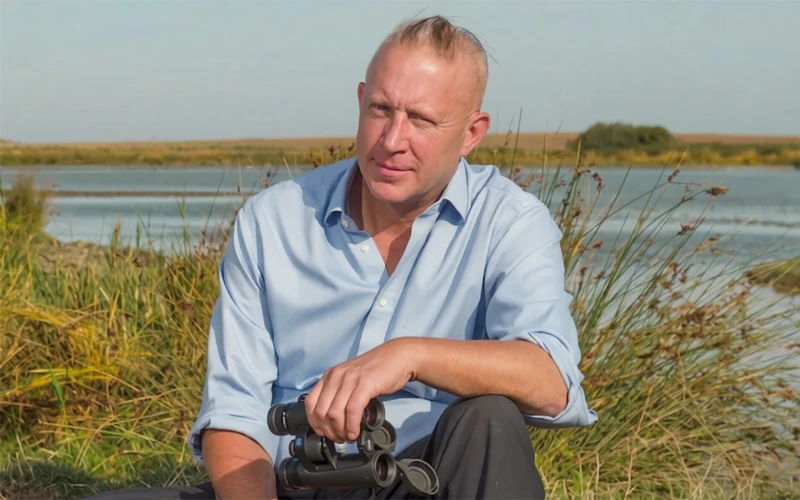
Jacob’s career has largely kept him connected to rural Norfolk, where his work and interests are rooted in the countryside rather than the entertainment industry’s public spotlight.
Financial Information
People interested in Jacob Fiennes net worth should understand that no reliable, verified public figure establishes his personal wealth. Unlike his actor siblings, whose projects may attract extensive media coverage, Jacob works in conservation and estate management, where individual financial details are not generally publicised.
His professional position, authorship, and years of experience indicate an established career, but they do not provide enough information to calculate his net worth accurately. Salary, property ownership, investments, debts, and other financial details would all affect such an estimate.
For this reason, assigning him a specific monetary value without credible evidence would be misleading. His public contribution is better assessed through his conservation work, practical influence on land management, and efforts to make farming more compatible with wildlife protection.
Frequently Asked Questions
1. Who is Jacob Fiennes?
He is a British conservationist, land management specialist, and author known for his work at the Holkham Estate in Norfolk.
2. How old is Jacob Fiennes?
He is 56 years old as of October 2026. He was born on May 27, 1970.
3. Is Jacob Fiennes the twin brother of Joseph Fiennes?
Yes. They are fraternal twins born on the same day in Salisbury, England, and pursued different professional careers.
4. What does he do for a living?
He works in conservation and land management, focusing on wildlife habitats, biodiversity, and sustainable farming practices.
5. What is his book about?
His 2022 book, Land Healer: How Farming Can Save Britain’s Countryside, explains how farming and environmental restoration can work together.
6. Who are his parents and siblings?
His parents were Mark Fiennes and Jennifer Lash. His siblings include Ralph, Martha, Magnus, Sophie, and his twin brother Joseph, as well as foster brother Michael Emery.
7. Does he have children?
Yes. Publicly reported information identifies two children, Teale Isabella Fiennes and Nathaniel Fiennes.
8. What is Jacob Fiennes’ net worth?
His exact net worth has not been reliably established in public sources. A specific estimate should not be treated as fact without supporting financial evidence.
Closing Remarks
Jacob Fiennes has built a distinctive career by applying practical experience to one of Britain’s important environmental challenges: protecting wildlife while maintaining productive farmland. His work at Holkham Estate, his earlier experience at Raveningham, and his book Land Healer all reflect the same principle that agriculture and nature can support one another when land is managed thoughtfully.
His work offers practical ideas for farmers and landowners seeking to improve biodiversity while maintaining productive farmland. Through his conservation projects and writing, Jacob continues to contribute to discussions about the future of Britain’s countryside.
Visit Breakcutter.com for the latest articles and updates.